Lens replacement surgery2026-07-13T13:13:10+00:00

Lens replacement surgery may reduce or remove your need for reading glasses. Find out how refractive lens exchange (RLE) works, whether it might be right for your eyes, and what you may realistically expect from the procedure.

Explore how this procedure can improve your vision and reduce your reliance on reading glasses

Lens replacement surgery may reduce or remove your need for reading glasses. Find out how refractive lens exchange (RLE) works, whether it might be right for your eyes, and what you may realistically expect from the procedure.

Explore how this procedure can improve your vision and reduce your reliance on reading glasses

As seen in

As seen in

Discover lens replacement surgery: Your FAQs answered

Quickly Discover How This Advanced Eye Treatment Can Reduce Your Reliance on Glasses

Lens replacement surgery, also called Refractive Lens Exchange (RLE), could be right for you if you want clear vision without glasses, like when you were younger.

Here’s why it might be a good option:

  • If laser eye surgery isn’t suitable for you but you still want clear vision.
  • If your glasses prescription is too strong for laser surgery to correct.
  • If your vision is changing due to ageing.
  • If your eyes are healthy with no serious issues like glaucoma.
  • If you want to prevent cataracts in the future.
  • During this procedure, we replace your eye’s natural lens with a new one that improves your vision. It’s important to consult an eye doctor to decide if lens replacement is right for you.
Lens replacement surgery works by removing your eye’s natural lens and replacing it with an artificial lens implant. This new lens is tailored to correct your vision, similar to how prescription glasses or contact lenses work. The surgery is typically quick and painless, performed under local anaesthesia. After the procedure, most patients experience improved vision without the need for glasses or contacts, allowing them to see clearly at various distances depending on the type of lens chosen.

Advantages of lens replacement surgery:

  • Comprehensive solution: Lens replacement addresses various eye conditions including presbyopia and severe farsightedness.
    Multifaceted benefits: Lens replacement helps with cataracts, astigmatism, nearsightedness, farsightedness, corneal problems, and dry eyes.
  • Reduced reliance on glasses: It minimises the need for glasses or contact lenses, easing headaches and eye strain.
  • Alternative option: Lens replacement is suitable for those unsuitable for other eye surgeries.
  • Cataract prevention: For patients who undergo RLE before a cataract has formed, replacing the natural lens with an artificial lens means that a cataract cannot develop in that lens in future – which may avoid the need for a separate cataract operation later in life.
  • Personalised improvements: Depending on individual eye conditions, patients can expect varied but positive outcomes.

Disadvantages:

  • Risk of retinal detachment: Nearsighted individuals face a higher risk of retinal detachment post-surgery.
  • Potential need for additional surgery: Some patients may require further procedures to achieve optimal results.
  • Higher cost: Lens replacement surgery tends to be more expensive than LASIK and other common eye surgeries, which may limit accessibility for some.

Lens replacement surgery is a bigger operation with more risks compared to other ways of fixing your eyes. However, if you have a serious eye problem and want to rely less on glasses or contact lenses, this surgery might still be worth it.

Here are some risks and problems that could happen with lens replacement:

  • The retina at the back of your eye could detach, especially if you are very nearsighted.
  • The new lens might move out of place.
  • The pressure in your eye could increase.
  • There might be an infection or bleeding inside your eye.
  • Your eyelid might droop.
  • You might see glare, halos, or blurry vision if you get a special kind of new lens called multifocal IOLs.

If lens replacement isn’t suitable for you, there are other options to improve your vision:

For seeing far away, up close, or correcting astigmatism, PRK, LASIK, or ICL might be considered. Keep in mind, after age 40, reading glasses may still be necessary.

Treatments like Presbyond, PresbyMAX, or laser blended vision can help with reading vision. However, a touch-up might be needed within 10 years.

When considering lens replacement, there are different types of new lenses (IOLs) available:

  • Monofocal fixed-focus IOLs: These lenses help you see clearly at one distance—either far, middle, or near.
  • Toric IOLs are a special type for astigmatism.
  • Multifocal IOLs: These lenses improve vision at many distances.
  • Accommodating IOLs: This lens can adjust within your eye to aid vision at different distances. It’s a unique type of monofocal lens.

Each lens option has its own advantages, and the best choice for you depends on your vision needs and eye health.

Lens replacement surgery is a brief procedure, typically taking about 15 minutes per eye. Each eye is treated separately, usually with a week between surgeries.

Here’s how it works:

Step 1: A small incision is made where the white part of your eye meets the clear front (cornea).

Step 2: A tiny circular opening is created in the thin, bag-like covering of the lens (called the lens capsule).

Step 3: The natural lens is gently fragmented into small pieces and removed from the eye, a process known as lens extraction.

Step 4: A new lens is then placed into the same capsule where the old lens was. The new lens is chosen carefully to improve your vision based on your specific needs.

After lens replacement surgery, your vision becomes clearer. This surgery removes the blurriness you used to see.

Patients who undergo lens replacement surgery with a multifocal IOL find that they can read, drive, and go about their day with much less reliance on glasses. Individual outcomes vary – some patients may still need glasses in different circumstances, such as for very fine print or low-light reading – and your surgeon will give you a clear, honest picture of what to expect for your specific eyes.

The information on this page is for general guidance only. Before making any decisions about your eye health or treatment, please speak to a registered ophthalmologist.

An information call with our team does not constitute a clinical assessment, diagnosis, or treatment recommendation.

Find out whether PRESBYOND® could help you manage the effects of presbyopia and reduce your reliance on reading glasses – book a consultation to explore your options.

It’s common to feel more confident and less held back once you’re no longer relying on reading glasses. Many patients say it brings a welcome sense of ease to everyday activities.

 

Find out whether PRESBYOND® could help you manage the effects of presbyopia and reduce your reliance on reading glasses – book a consultation to explore your options.

It’s common to feel more confident and less held back once you’re no longer relying on reading glasses. Many patients say it brings a welcome sense of ease to everyday activities.

Find out if you can reduce your reliance on reading glasses – in 3 simple steps

Exploring options to reduce your reliance on reading glasses can feel daunting. We’ve streamlined your journey toward clearer vision, making it straightforward and supportive.


GET IN TOUCH

Unsure if you can move past the need for reading glasses? The adventure to clearer vision begins with an understanding of your possibilities. Reach out to our welcoming team via phone on +27 79 686 6565 or easily schedule your free video call. It’s your pivotal first step towards exploring your options.

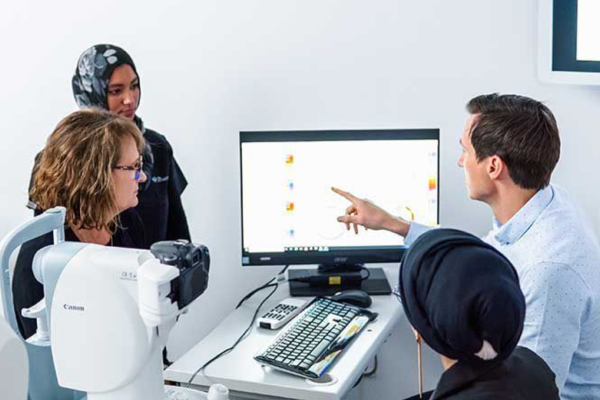
WE’LL MEET

At your appointment, we’ll dive into the specifics of your vision challenges and lifestyle preferences. Receive comprehensive answers to your questions and obtain a bespoke recommendation for your vision correction. Leave our clinic with a clear vision of the road ahead, equipped with the knowledge to make an empowered decision.


ENJOY FREEDOM

Our patients frequently share their astonishment at the swift and profound impact of their treatment on their daily lives. The joy of effortlessly reading a menu, texting on the phone, or glancing at the dashboard without reaching for glasses is a common refrain. Many reflect on their decision with a wish they had taken this step earlier, celebrating the youthful vitality regained.

What patients at Atlantic Eye Laser Centre have said

These are individual patient accounts. Circumstances, outcomes and experiences vary from person to person and do not represent a guarantee of results. Please speak to one of our ophthalmologists about what you may realistically expect for your eyes.

We answer your questions about vision correction treatment in Cape Town

Get a quick overview of everything you need to know about restoring your vision
Discover if you’re a candidate for reduced reliance on reading glasses

Unlock the ideal surgery option tailored to your age and lifestyle. Learn what it takes to qualify and dive into our quick quiz on ageing eyes to see if you can turn the page without your specs.

Discover if you’re a candidate for reduced reliance on reading glasses

Unlock the ideal surgery option tailored to your age and lifestyle. Learn what it takes to qualify and dive into our quick quiz on ageing eyes to see if you can turn the page without your specs.

Hi, I’m Daemon McClunan

I’m proud to be the founder of both Atlantic Eye Centre, an eye specialist centre, and LIQID Medical Pty, a biotech company. My passion for research and innovation has led me to create four patented devices, and receive awards during my specialist training.

With a medical degree from Stellenbosch University, a specialist degree from the University of Cape Town, and experience working in Laser Eye Surgery centres in Canada, Germany, India and London, I’m dedicated to providing dedicated, patient-centred care.

Beyond the clinic, I’ve embarked on humanitarian missions, travelling over 15,000km by motorbike to provide rural eye screenings. In my downtime, I love mountain biking, diving, and spending quality time with my family.

My goal is for every patient to feel genuinely informed, comfortable, and well cared for – from their first conversation right through to their last post-operative visit.

Dr Daemon McClunan

MBChB(SU), DipOphth(SA), MMed(UCT), FcOphth(SA)
Go to Top