
LASIK eye surgery2026-07-14T07:15:28+00:00

LASIK may be the solution for your eyes. Discover if this precise, fast procedure is right for you.

LASIK uses a precise laser to reshape the cornea and correct refractive errors such as short-sightedness, and astigmatism. Suitable patients find they can see clearly without glasses or contact lenses after the procedure – your assessment will inform the decision that you and your doctor make about what is realistic for your eyes.

As seen in

LASIK may be the solution for your eyes. Discover if this precise, fast procedure is right for you.

LASIK uses a precise laser to reshape the cornea and correct refractive errors such as short-sightedness, and astigmatism. Suitable patients find they can see clearly without glasses or contact lenses after the procedure – your assessment will inform the decision that you and your doctor make about what is realistic for your eyes.

As seen in

Everything You Need to Know About LASIK eye surgery: Clear Answers for Clearer Vision

Discover the benefits of LASIK and find answers to your most pressing questions about this life-changing treatment.

LASIK may help you see well without glasses or contacts if you’re over 18, your eye strength has stayed the same for a year, and your eyes are healthy.

You shouldn’t have any major eye problems like glaucoma or cataracts, and your corneas need to be a certain thickness.

We’ll check all of this during your face-to-face screening to see if it is right for you.

LASIK is a surgery that reshapes the cornea, the front part of the eye, to improve vision. During the procedure, a thin flap is created on the cornea, which is lifted to access the underlying tissue. Using a laser, small amounts of tissue are removed to reshape the cornea, correcting refractive errors such as nearsightedness, farsightedness, and astigmatism. The flap is then placed back in position, and the eye heals naturally without the need for stitches.

Advantages of LASIK:

  • Precision in Vision Correction: LASIK uses advanced laser technology to reshape the cornea with exceptional accuracy, effectively correcting vision issues like nearsightedness, farsightedness, and astigmatism.
  • Reduced Reliance on Glasses and Contacts: One of the most significant benefits is the potential to reduce your dependence on glasses or contact lenses, offering greater convenience and comfort in daily activities for many patients.
  • Comparatively Quick Recovery: The recovery process for LASIK is generally swift, with many patients resuming normal activities soon after the procedure.
  • Minimal Discomfort During the Procedure: The LASIK procedure is relatively quick, usually taking about 15 minutes for both eyes, and involves minimal discomfort due to the use of numbing eye drops.

Disadvantages of LASIK:

  • Risk of Dry Eyes: LASIK can cause a decrease in tear production, leading to dry eyes. This condition can be temporary or, in some cases, long-lasting. It’s often manageable with artificial tears or other treatments.
  • Visual Disturbances: Some patients may experience halos, glare, or fluctuating vision, particularly in low-light conditions. These symptoms usually diminish over time but can be bothersome initially.
  • Not Suitable for Everyone: LASIK is not an ideal solution for all vision problems. People with certain eye conditions, very thin corneas, or severe vision issues may not be good candidates. Additionally, some individuals may still need glasses for specific activities, such as reading or driving at night.

LASIK, like any surgery, carries risks, although most are rare.

Serious risks include vision worsening despite glasses, corneal shape changes, and eye infections.

Less serious risks include dry eyes, night vision issues like halos around lights, and the potential need for glasses or additional surgery later on.

It’s crucial to discuss these risks with your eye care provider to make an informed decision about LASIK.

LASIK isn’t the only option for vision correction.

Alternative procedures like PRK (Photorefractive Keratectomy) and SMILE (Small Incision Lenticule Extraction) offer similar outcomes for those unsuitable for LASIK.

PRK involves removing the outer layer of the cornea, while SMILE uses a laser to create a small disc of tissue inside the cornea. Both procedures are effective but may have longer recovery times than LASIK.

Additionally, lens replacement surgery, such as implantable contact lenses (ICL) or intraocular lenses (IOLS), provides an alternative for those with thin corneas or extreme prescriptions unsuitable for laser surgery.

  • Step 1: Special drops are applied to your eye to ensure numbness, making the procedure painless.
  • Step 2: A gentle tool is used to keep your eye steady and open once the numbing drops take effect.
  • Step 3: A precise laser creates a small flap on the clear front part of your eye, allowing access to the cornea.
  • Step 4: Another laser precisely reshapes the cornea, correcting vision imperfections and improving clarity.
  • Step 5: The flap is carefully folded back into its original position, acting as a natural protective barrier.
  • Step 6: Many patients notice an improvement in their vision shortly after the procedure. Vision continues to settle over the following days and weeks, and the surgeon monitors progress at post-operative appointments. Individual recovery varies.

Clinical data shows that a significant proportion of suitable patients achieve 20/20 unaided visual acuity or better following LASIK. Results depend on your prescription, the characteristics of your cornea, and how your eyes heal. Not all patients achieve 20/20, and some may still benefit from glasses for specific tasks such as night driving – your surgeon will discuss what is realistic for you

The degree of improvement varies based on pre-existing conditions. Where clinically indicated and within the agreed post-operative care period, your surgeon may recommend an enhancement procedure. Enhancement procedures are provided at no additional cost when clinically indicated within 12 months of your original procedure; a fee applies to enhancements requested after this period. Full eligibility criteria and the terms of your aftercare plan will be explained at your consultation and set out in your treatment agreement.

While some may still require glasses or contacts post-surgery, their dependence significantly diminishes, often requiring weaker prescriptions.

The information on this page is for general guidance only. Before making any decisions about your eye health or treatment, please speak to a registered ophthalmologist.

An information call with our team does not constitute a clinical assessment, diagnosis, or treatment recommendation.

Not sure if you qualify for SMILE?

Book a video call with our team to find out whether you might be a candidate for SMILE and what clearer vision might mean for your lifestyle.

Not sure if you qualify for SMILE?

Book a video appointment to find out if you’re a candidate for vision correction. Most people assume they are either definitely a candidate or definitely not. The screening usually surprises people either way.

3 Simple Steps To Explore Your Vision Correction Options

Navigating the world of laser eye surgery can feel like a maze. We’ve streamlined the process, making your journey toward clearer vision simple.


Tell us about your eyes

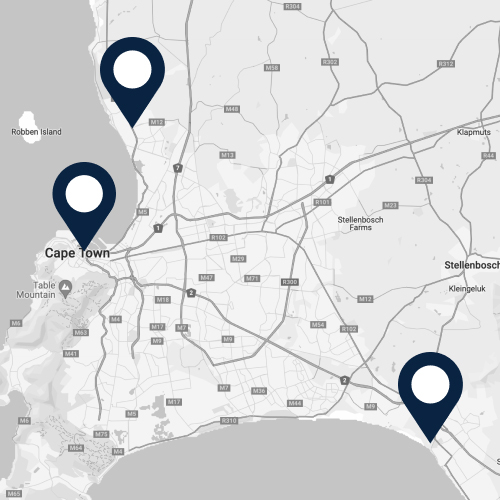
Wondering if laser eye surgery could reduce your reliance on glasses or contacts? The journey begins here. Connect with our welcoming team via +27 79 686 6565 for Foreshore & Blaauwberg or +27 21 802 2853 for Somerset West or book your video call online. It’s your first step towards clarity.

Come in for a screening

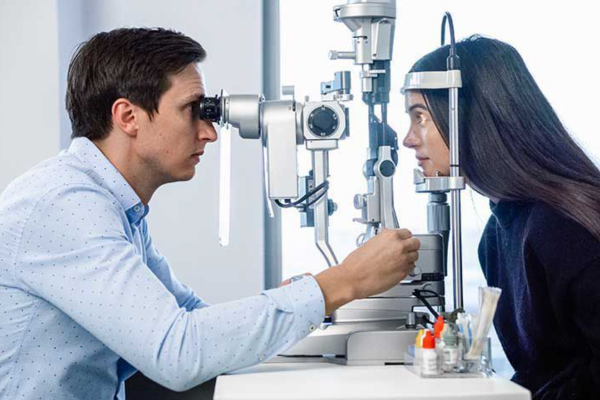
Your ophthalmologist maps your cornea, measures your prescription, and assesses whether SMILE, or any procedure,  is appropriate for your eyes. This is where suitability is confirmed. Cost of the screening will be given when you book.


Decide with full information

If you are a candidate and choose to go ahead, your ophthalmologist will walk through the procedure, the risks, what to expect, and the full cost in writing. Surgery is only scheduled once you are satisfied and have given informed consent.

What patients at Atlantic Eye Laser Centre have said

These are individual patient accounts. Circumstances, outcomes and experiences vary from person to person and do not represent a guarantee of results. Please speak to one of our ophthalmologists about what you may realistically expect for your eyes.

We answer your questions about vision correction treatment in Cape Town

Get a quick overview of everything you need to know about restoring your vision

Reduce Your Reliance on Frames – Explore Your Options

Laser eye surgery isn’t a one-size-fits-all deal. Your eyes and your lifestyle play a big part. Ready to see which type suits you? Take this 2-min self-test and find out.

See Your Options Clearly – Explore What’s Possible

Laser eye surgery isn’t a one-size-fits-all deal. Your eyes and your lifestyle play a big part. Ready to see which type suits you? Take this 2-min quiz and find out.

Hi, I’m Daemon McClunan

I’m proud to be the founder of both Atlantic Eye Centre, an eye specialist centre, and LIQID Medical Pty, a biotech company. My passion for research and innovation has led me to create four patented devices, and receive awards during my specialist training.

With a medical degree from Stellenbosch University, a specialist degree from the University of Cape Town, and experience working in Laser Eye Surgery centres in Canada, Germany, India and London, I’m dedicated to providing dedicated, patient-centred care.

Beyond the clinic, I’ve embarked on humanitarian missions, travelling over 15,000km by motorbike to provide rural eye screenings. In my downtime, I love mountain biking, diving, and spending quality time with my family.

My goal is for every patient to feel genuinely informed, comfortable, and well cared for – from their first conversation right through to their last post-operative visit.

Dr Daemon McClunan

MBChB(SU), DipOphth(SA), MMed(UCT), FcOphth(SA)
Go to Top