
What is Presbyopia?
If you’ve started holding your phone at arm’s length to read a message, you might have presbyopia. This common age-related condition affects near vision, making everyday tasks like reading, texting, and even checking a menu in a dimly lit restaurant a challenge. But what exactly is presbyopia, and what can you do about it?
Understanding Presbyopia
Presbyopia is the gradual loss of your eye’s ability to focus on nearby objects. It typically becomes noticeable in your early to mid-40s and continues to progress into your 60s. Unlike nearsightedness or farsightedness, which are related to the shape of the eye, presbyopia happens because the lens inside your eye loses flexibility over time.
When you’re younger, your eye’s lens is soft and flexible, allowing it to change shape and focus light correctly onto the retina. As you age, the lens hardens and loses elasticity, making it harder to focus on things up close. This is a completely normal part of ageing—everyone will experience presbyopia eventually, even if they’ve never needed glasses before.
Symptoms of Presbyopia
The first signs of presbyopia often include:
- Holding books, phones, or menus farther away to see them clearly
- Struggling with small print, especially in dim lighting
- Eye strain or headaches after reading or using digital screens for extended periods
- Needing brighter light to read comfortably
If you’re noticing these symptoms, you’re not alone. Millions of people worldwide deal with presbyopia, and fortunately, there are effective solutions available.
What Are the Treatment Options for Presbyopia?
- Reading Glasses – If you don’t have other vision problems, over-the-counter reading glasses might be all you need. However, if you already wear prescription glasses, you may require bifocals, trifocals, or progressive lenses.
- Contact Lenses – Multifocal or monovision contact lenses can help correct presbyopia, allowing you to see both near and far.
- Laser Vision Correction – Procedures like Presbyond can help reduce dependence on reading glasses by reshaping the cornea to improve depth of focus.
- Lens Replacement Surgery – If you’re seeking a long-term solution, refractive lens exchange (RLE) can replace your ageing natural lens with an advanced artificial lens that restores near vision.
Can You Prevent Presbyopia?
There’s no way to prevent presbyopia, but you can slow down its impact with good eye health habits:
- Use proper lighting when reading or working on screens
- Take breaks from digital devices to reduce eye strain
- Get regular eye exams to monitor changes in your vision
If presbyopia is interfering with your daily life, you don’t have to rely on reading glasses forever. At Atlantic Eye Laser Centre, we offer advanced laser and lens-based solutions to help you see clearly again—without the hassle of glasses or contacts.
Take our quick online suitability self-test today and find out if you're a candidate for laser or lens-based vision correction.
Find out if you are suitable for laser eye surgery
Not everyone is eligible for vision correction surgery.
Find out if you could benefit from this life changing surgery by taking the quick self-suitability quiz below:
Our most popular procedures
What our patients say…
★ ★ ★ ★ ★
“The best care, the best treatment and the best doctors.”
 M.A.
M.A.★ ★ ★ ★ ★
“Everything was done with care and the doctor explained everything in detail. My surgery was a success and my sight has significantly improved – I no longer use glasses.”
 N.N.
N.N.★ ★ ★ ★ ★
“All I can say is WOW! I feel like I have new eyes.
Thank you just doesn’t even began to say how grateful I am. Your hole team is an absolute pleasure to be around. You guys rock”
 S.B.
S.B.★ ★ ★ ★ ★
“The service is excellent and the doctors are experts in their fields. I felt relaxed and confident that I was in great hands. Staff are warm, friendly and very helpful.”
 F.W.
F.W.★ ★ ★ ★ ★
“I would refer Dr Beatty to anyone interested in LASIK or PRK eye surgery. The entire experience was really pleasant with his and his staff’s professional advice and care before, during and after the surgery.
I am very thankful to be able to look at the world and go about my day to day activities without the hassle of glasses or contact lenses.”
 P.M.
P.M.★ ★ ★ ★ ★
“Best money spent ever. I am so happy with the results after I had LASIK done.”
 M.A.
M.A.★ ★ ★ ★ ★
“BEST decision and results after I had my LASIK done by Doctor Beatty!”
 A.A.
A.A.★ ★ ★ ★ ★
“I will definitely recommend Dr Beatty. I am so happy with my LASIK.”
 R.B.
R.B.★ ★ ★ ★ ★
“Dr Daemon McClunan and the entire staff at Atlantic Eye Centre, Foreshore are beyond AMAZING. The medical care I received from Dr McClunan was outstanding and the staff was always friendly and professional.”
 M.M.
M.M.We have replaced the images of real patients who provided these testimonials to protect their privacy.

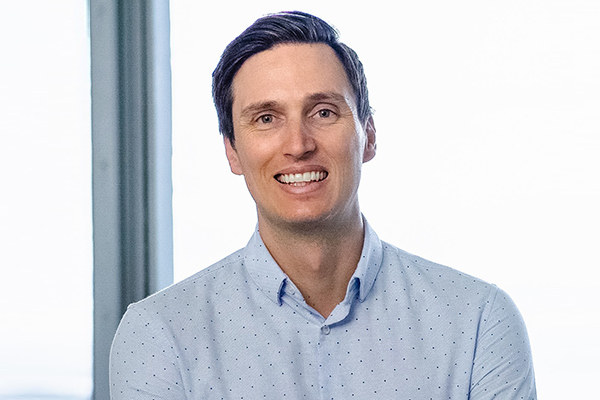
Hi, I’m Daemon McClunan
I’m proud to be the founder of both Atlantic Eye Centre, an eye specialist centre, and LIQID Medical Pty, a biotech company. My passion for research and innovation has led me to create four patented devices, and receive awards during my specialist training.
With a medical degree from Stellenbosch University, a specialist degree from the University of Cape Town, and experience working in Laser Eye Surgery centres in Canada, Germany, India and London, I’m dedicated to providing dedicated, patient-centred care.
Beyond the clinic, I’ve embarked on humanitarian missions, travelling over 15,000km by motorbike to provide rural eye screenings. In my downtime, I love mountain biking, diving, and spending quality time with my family.
My goal is for every patient to feel genuinely informed, comfortable, and well cared for – from their first conversation right through to their last post-operative visit.
Dr Daemon McClunan
MBChB(SU), DipOphth(SA), MMed(UCT), FcOphth(SA)