
How to speed up PRK recovery?
PRK surgery gives you clearer vision without glasses or contacts—but the recovery takes a bit longer than LASIK.
So naturally, one of the top questions is:
How can I speed up PRK recovery?
The good news? There are simple things you can do to support faster, more comfortable healing.
1. Follow your aftercare instructions carefully
This might sound obvious, but it’s the most important thing. We give you detailed instructions for a reason—because they work.
This includes:
- Using your prescribed eye drops (antibiotic and anti-inflammatory)
- Avoiding rubbing your eyes
- Wearing protective sunglasses outdoors
- Attending all follow-up appointments
Stick to the plan, and you’ll give your eyes the best chance to heal quickly.
2. Use your lubricating eye drops regularly
Dryness is common during PRK recovery. It can make your eyes feel gritty, blurry, or uncomfortable.
Keep them hydrated with the artificial tears we provide. Use them often—even if your eyes feel fine—to stay ahead of dryness.
3. Rest your eyes
Give your eyes regular breaks, especially in the first few days. Avoid screens, reading, or focusing for too long.
The more you rest your eyes, the faster they heal.
4. Wear your bandage lenses as instructed
We’ll place a soft contact lens over your eyes after surgery. These "bandage lenses" protect the healing surface.
Don't remove them unless instructed. We’ll take them out when it’s safe.
5. Avoid dusty or smoky environments
Your eyes are more sensitive right after surgery. Smoke, dust, wind, and other irritants can slow healing or cause inflammation.
Stay indoors when possible, or wear wraparound sunglasses when outside.
6. Don’t rub your eyes—no matter what
This one’s hard, especially when your eyes feel itchy or irritated. But rubbing can damage the healing surface and delay recovery.
Use drops, cool compresses, or gently close your eyes to relieve discomfort instead.
7. Eat and drink to support healing
Healthy eyes start with a healthy body.
- Drink plenty of water
- Eat leafy greens, fish, and foods rich in omega-3s
- Consider a vision-supporting supplement if recommended.
Good nutrition helps your eyes repair themselves more efficiently.
8. Avoid intense exercise (at first)
You can usually go for walks or do light activities after the first few days. But avoid heavy lifting, swimming, or anything that could get sweat or water in your eyes for the first week or two.
9. Be patient—healing takes time
It’s totally normal for vision to come and go in the first few weeks. Your eyes are adjusting, healing, and stabilising.
Most people see a steady improvement over the first month, with continued sharpness in the months that follow.
Want to make sure PRK is right for you?
Take the first step by finding out if you’re a good candidate. Take the PRK suitability self-test now
Find out if you are suitable for laser eye surgery
Not everyone is eligible for vision correction surgery.
Find out if you could benefit from this life changing surgery by taking the quick self-suitability quiz below:
Our most popular procedures
What our patients say…
★ ★ ★ ★ ★
“The best care, the best treatment and the best doctors.”
 M.A.
M.A.★ ★ ★ ★ ★
“Everything was done with care and the doctor explained everything in detail. My surgery was a success and my sight has significantly improved – I no longer use glasses.”
 N.N.
N.N.★ ★ ★ ★ ★
“All I can say is WOW! I feel like I have new eyes.
Thank you just doesn’t even began to say how grateful I am. Your hole team is an absolute pleasure to be around. You guys rock”
 S.B.
S.B.★ ★ ★ ★ ★
“The service is excellent and the doctors are experts in their fields. I felt relaxed and confident that I was in great hands. Staff are warm, friendly and very helpful.”
 F.W.
F.W.★ ★ ★ ★ ★
“I would refer Dr Beatty to anyone interested in LASIK or PRK eye surgery. The entire experience was really pleasant with his and his staff’s professional advice and care before, during and after the surgery.
I am very thankful to be able to look at the world and go about my day to day activities without the hassle of glasses or contact lenses.”
 P.M.
P.M.★ ★ ★ ★ ★
“Best money spent ever. I am so happy with the results after I had LASIK done.”
 M.A.
M.A.★ ★ ★ ★ ★
“BEST decision and results after I had my LASIK done by Doctor Beatty!”
 A.A.
A.A.★ ★ ★ ★ ★
“I will definitely recommend Dr Beatty. I am so happy with my LASIK.”
 R.B.
R.B.★ ★ ★ ★ ★
“Dr Daemon McClunan and the entire staff at Atlantic Eye Centre, Foreshore are beyond AMAZING. The medical care I received from Dr McClunan was outstanding and the staff was always friendly and professional.”
 M.M.
M.M.We have replaced the images of real patients who provided these testimonials to protect their privacy.

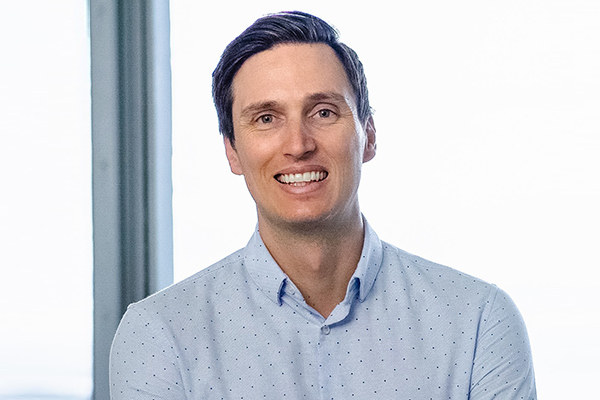
Hi, I’m Daemon McClunan
I’m proud to be the founder of both Atlantic Eye Centre, an eye specialist centre, and LIQID Medical Pty, a biotech company. My passion for research and innovation has led me to create four patented devices, and receive awards during my specialist training.
With a medical degree from Stellenbosch University, a specialist degree from the University of Cape Town, and experience working in Laser Eye Surgery centres in Canada, Germany, India and London, I’m dedicated to providing dedicated, patient-centred care.
Beyond the clinic, I’ve embarked on humanitarian missions, travelling over 15,000km by motorbike to provide rural eye screenings. In my downtime, I love mountain biking, diving, and spending quality time with my family.
My goal is for every patient to feel genuinely informed, comfortable, and well cared for – from their first conversation right through to their last post-operative visit.
Dr Daemon McClunan
MBChB(SU), DipOphth(SA), MMed(UCT), FcOphth(SA)