
Can you drive after PRK surgery?
Thinking about PRK surgery? One of the first things patients ask is: “How soon can I drive afterward?”
It’s a smart question. Your vision is temporarily affected during the early healing stages, and safety matters—both for you and others on the road.
In this blog, we’ll walk you through when it’s safe to drive again after PRK, why the timeline is different from LASIK, and what signs to watch for before getting behind the wheel.
First things first: You can’t drive home after surgery
Immediately after PRK, your vision will be hazy, your eyes may feel gritty or sensitive, and you'll be wearing a protective bandage contact lens. This means you cannot drive yourself home. You’ll need someone to take you, wait for you, and bring you back safely.
We recommend having a trusted friend or family member assist you—not just with transport, but with support as well.
Why can’t you drive right away?
PRK involves removing the surface layer of the cornea (the epithelium). While the laser treatment underneath heals, that surface takes several days to regenerate.
In the first few days:
- Your vision will be blurry
- You may experience light sensitivity
- You may feel mild to moderate discomfort
- Your depth perception may be off
- Your reaction time might be slower
This makes driving unsafe—even if you “feel fine.”
When can most people drive after PRK?
Most patients can drive again around 5 to 7 days after surgery.
Here’s a general breakdown:
- Days 1–3: Vision is very blurry. You should avoid screens, reading, and driving.
- Days 4–6: The healing surface starts to settle. Vision begins to clear.
- By day 7: Many people feel comfortable driving short distances—if their vision is clear enough and they’re no longer using strong medications.
How will I know when I can drive safely again?
You’ll come in for a follow-up appointment a few days after surgery. We’ll check your healing, remove the bandage lens (usually by day 5), and assess your vision.
If your vision meets legal driving standards and you feel comfortable, you’ll likely be cleared to drive.
We’ll always give you individualised advice based on your recovery.
Is night driving more difficult after PRK?
Yes—temporarily.
For a few weeks after surgery, you may notice:
- Halos or starbursts around lights
- Increased glare from headlights
- Difficulty judging distance in low light
These symptoms usually improve as your vision stabilises. If night driving feels uncomfortable, stick to daytime driving until you feel fully confident.
Tips for driving after PRK:
- Don’t rush it. Only drive once your surgeon gives you the green light.
- Take it slow. Start with short, familiar routes in daylight.
- Use sunglasses. Protect your eyes from glare and bright light.
- Stay off the road if your vision seems “off.” Even if you’ve been cleared, don’t drive if you’re tired or experiencing symptoms that affect your sight.
LASIK vs. PRK: Why the driving timeline is different
LASIK patients often drive the next day. PRK takes longer because the healing process is slower and more surface-based.
But the end result? Equally clear vision in most cases—just on a different timeline.
Thinking about PRK but not sure what to expect?
Start with our self-test. It’s quick, free, and gives you a better idea of whether PRK is right for you.
Find out if you are suitable for laser eye surgery
Not everyone is eligible for vision correction surgery.
Find out if you could benefit from this life changing surgery by taking the quick self-suitability quiz below:
Our most popular procedures
What our patients say…
★ ★ ★ ★ ★
“The best care, the best treatment and the best doctors.”
 M.A.
M.A.★ ★ ★ ★ ★
“Everything was done with care and the doctor explained everything in detail. My surgery was a success and my sight has significantly improved – I no longer use glasses.”
 N.N.
N.N.★ ★ ★ ★ ★
“All I can say is WOW! I feel like I have new eyes.
Thank you just doesn’t even began to say how grateful I am. Your hole team is an absolute pleasure to be around. You guys rock”
 S.B.
S.B.★ ★ ★ ★ ★
“The service is excellent and the doctors are experts in their fields. I felt relaxed and confident that I was in great hands. Staff are warm, friendly and very helpful.”
 F.W.
F.W.★ ★ ★ ★ ★
“I would refer Dr Beatty to anyone interested in LASIK or PRK eye surgery. The entire experience was really pleasant with his and his staff’s professional advice and care before, during and after the surgery.
I am very thankful to be able to look at the world and go about my day to day activities without the hassle of glasses or contact lenses.”
 P.M.
P.M.★ ★ ★ ★ ★
“Best money spent ever. I am so happy with the results after I had LASIK done.”
 M.A.
M.A.★ ★ ★ ★ ★
“BEST decision and results after I had my LASIK done by Doctor Beatty!”
 A.A.
A.A.★ ★ ★ ★ ★
“I will definitely recommend Dr Beatty. I am so happy with my LASIK.”
 R.B.
R.B.★ ★ ★ ★ ★
“Dr Daemon McClunan and the entire staff at Atlantic Eye Centre, Foreshore are beyond AMAZING. The medical care I received from Dr McClunan was outstanding and the staff was always friendly and professional.”
 M.M.
M.M.We have replaced the images of real patients who provided these testimonials to protect their privacy.

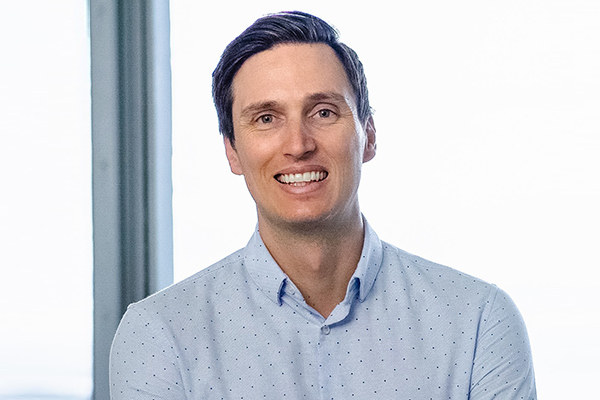
Hi, I’m Daemon McClunan
I’m proud to be the founder of both Atlantic Eye Centre, an eye specialist centre, and LIQID Medical Pty, a biotech company. My passion for research and innovation has led me to create four patented devices, and receive awards during my specialist training.
With a medical degree from Stellenbosch University, a specialist degree from the University of Cape Town, and experience working in Laser Eye Surgery centres in Canada, Germany, India and London, I’m dedicated to providing dedicated, patient-centred care.
Beyond the clinic, I’ve embarked on humanitarian missions, travelling over 15,000km by motorbike to provide rural eye screenings. In my downtime, I love mountain biking, diving, and spending quality time with my family.
My goal is for every patient to feel genuinely informed, comfortable, and well cared for – from their first conversation right through to their last post-operative visit.
Dr Daemon McClunan
MBChB(SU), DipOphth(SA), MMed(UCT), FcOphth(SA)