
Can LASIK correct nearsightedness and farsightedness at the same time?
If you wear glasses or contact lenses, and you’ve been told you’re both nearsighted and farsighted, you might wonder…
Can LASIK fix both?
The short answer: yes—in many cases, LASIK can help correct both types of vision problems. But there’s a little more to it than that.
Let’s break it down simply so you know what’s possible, what’s not, and what your options might be.
What is nearsightedness?
Nearsightedness (or myopia) means you can see close objects clearly, but things in the distance are blurry. It happens when your eye is longer than normal, or your cornea is too curved, causing light to focus in front of the retina.
What is farsightedness?
Farsightedness (or hyperopia) means you can see faraway objects more clearly, but struggle with things up close. This is usually because your eye is too short, or your cornea is too flat—so light focuses behind the retina.
Can someone really have both at the same time?
Technically, no—you’re usually either nearsighted or farsighted in each eye. But it’s possible to have:
- One eye that’s nearsighted and one that’s farsighted
- Mild farsightedness with age-related near vision loss (called presbyopia)
- Astigmatism (which distorts vision at all distances) combined with one of the above.
So while you may feel like you have both, it’s more about how your vision is behaving at different distances.
Can LASIK treat both?
Yes. LASIK can be tailored to correct:
- Nearsightedness
- Farsightedness
- Astigmatism
- Presbyopia (with a blended vision option like Presbyond).
If your eyes meet certain safety criteria—like corneal thickness and stable prescriptions—then LASIK can correct the specific issues in each eye to help you see clearly at all distances.
What if I have presbyopia (I need reading glasses)?
If you’re over 40 and struggle with near vision but your distance vision is fine—or already corrected with glasses—this is likely presbyopia.
LASIK on its own doesn’t treat presbyopia, but there is a special version called Presbyond (sometimes called laser blended vision). It’s designed to improve your range of vision so you can see both near and far—often without glasses.
It works by correcting one eye for distance and the other slightly for near vision, blending the two together so your brain adjusts naturally.
What determines if I’m a good candidate?
A few key things:
- Stable vision for at least a year
- Healthy eyes with no underlying disease
- Corneas that are thick enough for laser treatment
- Realistic expectations and a lifestyle that benefits from reduced glasses use.
How effective is it?
Most people who have LASIK achieve 20/20 vision or better for distance. If you choose blended vision (Presbyond), you’ll likely be able to see clearly across a range of distances without relying heavily on glasses.
Is it safe to treat both eyes differently?
Yes. Treating one eye for distance and one for near (a technique known as monovision or blended vision) has been used safely for decades. Your brain learns to adapt, and with blended vision, the transition between near and far is smoother than traditional monovision.
How do I know what’s right for me?
Start with our quick, free self-test. It’s a great way to find out if LASIK or blended vision might be suitable for you.
Find out if you are suitable for laser eye surgery
Not everyone is eligible for vision correction surgery.
Find out if you could benefit from this life changing surgery by taking the quick self-suitability quiz below:
Our most popular procedures
What our patients say…
★ ★ ★ ★ ★
“The best care, the best treatment and the best doctors.”
 M.A.
M.A.★ ★ ★ ★ ★
“Everything was done with care and the doctor explained everything in detail. My surgery was a success and my sight has significantly improved – I no longer use glasses.”
 N.N.
N.N.★ ★ ★ ★ ★
“All I can say is WOW! I feel like I have new eyes.
Thank you just doesn’t even began to say how grateful I am. Your hole team is an absolute pleasure to be around. You guys rock”
 S.B.
S.B.★ ★ ★ ★ ★
“The service is excellent and the doctors are experts in their fields. I felt relaxed and confident that I was in great hands. Staff are warm, friendly and very helpful.”
 F.W.
F.W.★ ★ ★ ★ ★
“I would refer Dr Beatty to anyone interested in LASIK or PRK eye surgery. The entire experience was really pleasant with his and his staff’s professional advice and care before, during and after the surgery.
I am very thankful to be able to look at the world and go about my day to day activities without the hassle of glasses or contact lenses.”
 P.M.
P.M.★ ★ ★ ★ ★
“Best money spent ever. I am so happy with the results after I had LASIK done.”
 M.A.
M.A.★ ★ ★ ★ ★
“BEST decision and results after I had my LASIK done by Doctor Beatty!”
 A.A.
A.A.★ ★ ★ ★ ★
“I will definitely recommend Dr Beatty. I am so happy with my LASIK.”
 R.B.
R.B.★ ★ ★ ★ ★
“Dr Daemon McClunan and the entire staff at Atlantic Eye Centre, Foreshore are beyond AMAZING. The medical care I received from Dr McClunan was outstanding and the staff was always friendly and professional.”
 M.M.
M.M.We have replaced the images of real patients who provided these testimonials to protect their privacy.

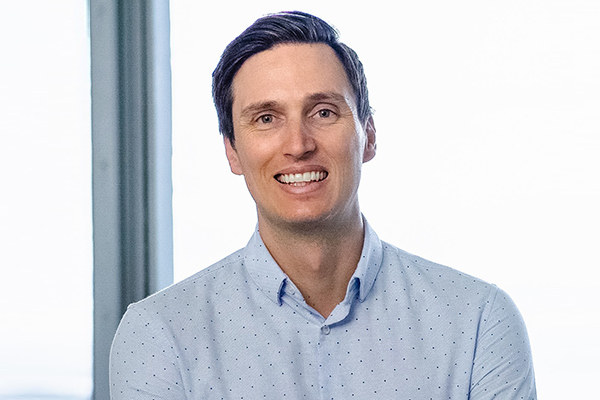
Hi, I’m Daemon McClunan
I’m proud to be the founder of both Atlantic Eye Centre, an eye specialist centre, and LIQID Medical Pty, a biotech company. My passion for research and innovation has led me to create four patented devices, and receive awards during my specialist training.
With a medical degree from Stellenbosch University, a specialist degree from the University of Cape Town, and experience working in Laser Eye Surgery centres in Canada, Germany, India and London, I’m dedicated to providing dedicated, patient-centred care.
Beyond the clinic, I’ve embarked on humanitarian missions, travelling over 15,000km by motorbike to provide rural eye screenings. In my downtime, I love mountain biking, diving, and spending quality time with my family.
My goal is for every patient to feel genuinely informed, comfortable, and well cared for – from their first conversation right through to their last post-operative visit.
Dr Daemon McClunan
MBChB(SU), DipOphth(SA), MMed(UCT), FcOphth(SA)