Why some patients choose SMILE over LASIK
Most people who begin researching laser eye surgery arrive at the same two names fairly quickly. LASIK is the one they have heard of. SMILE is the one that makes them pause.
Both procedures can correct short-sightedness. Both use laser technology. But they are not the same procedure, and the difference is not only technical.
For some patients, the distinction matters in practical terms. For others, it does not. Which category you fall into is something a surgeon can help you work out, but only after a proper assessment. This article explains what the two procedures involve, where they differ, and why some patients and surgeons consider SMILE the more appropriate option in certain circumstances. It is not a recommendation. It is information to help you ask better questions.
What LASIK involves
LASIK has been performed for several decades and has a substantial published track record. The procedure involves creating a thin flap in the outer layer of the cornea, folding it back, using an excimer laser to reshape the tissue underneath, and then repositioning the flap. The flap heals over time, though it remains a structural feature of the eye.
Recovery is generally relatively fast, with many patients noticing a significant improvement in vision within the first day or two. The procedure is well understood and widely performed.
Like all surgical procedures, LASIK carries risks. These include dry eye symptoms in the post-operative period, visual disturbances such as halos or glare, and in rare cases, complications related to the flap. A thorough pre-operative assessment is essential to identify patients for whom these risks may be higher.
What SMILE involves
SMILE, which stands for Small Incision Lenticule Extraction, takes a different approach. There is no flap. A femtosecond laser creates a small lens-shaped piece of tissue inside the cornea, called a lenticule, which is then removed through a small incision of around 2 to 4 millimetres.
The surface of the cornea remains largely intact. The incision is smaller than the one used in LASIK. SMILE is primarily used to correct short-sightedness and myopic astigmatism. Candidacy depends on prescription range and individual eye measurements, and not all short-sighted patients will be suitable.
SMILE also carries risks, including visual disturbances during the recovery period and, in some cases, the need for further treatment. As with LASIK, outcomes vary between patients, and not everyone achieves the same result.
Where the procedures differ in practice
The absence of a flap is the most frequently discussed difference between SMILE and LASIK. For patients who are involved in contact sports, or who work in environments where a physical impact to the face is a realistic possibility, some surgeons consider the flapless approach relevant to the risk discussion. LASIK flap displacement is uncommon, but it is a known complication, and for some patients it is a factor worth discussing.
Dry eye is another area where the two procedures differ in profile. LASIK involves cutting corneal nerves as part of the flap creation process. For most patients this resolves over months, but for some it contributes to post-operative dryness that can persist. SMILE’s smaller incision disrupts fewer corneal nerves, and some published research suggests a lower incidence of dry eye symptoms after SMILE compared to LASIK in certain patient groups. This is not a universal finding, individual results vary, and it is a factor to discuss with your surgeon if dry eye is already a concern for you.
Where LASIK has a different profile
LASIK currently has a broader published treatment range. It can address a wider variety of prescriptions, including certain degrees of long-sightedness and astigmatism that SMILE does not yet address as comprehensively in all cases.
LASIK also has a longer published track record. The volume of long-term data available for LASIK is larger than for SMILE, simply because LASIK has been performed for longer. For some patients and surgeons, that history is a relevant consideration.
Recovery timelines are broadly similar, though some patients report that LASIK vision stabilises slightly faster in the first 24 to 48 hours.
The question is not which procedure is better
It is which procedure, if either, is appropriate for your specific eyes and circumstances.
That distinction matters. A patient with a particular corneal profile, prescription or lifestyle may be better suited to one procedure than the other. A patient who is not a suitable candidate for either may be better served by a different approach entirely. The only way to know is through a thorough clinical assessment.
A clinic that offers both LASIK and SMILE, and that can explain the differences without defaulting to a single recommendation, is better placed to advise you than one that performs only one procedure.
If you would like to find out more
Atlantic Eye Laser Centre offers consultations to assess whether SMILE, LASIK or another approach may be appropriate for your situation. If you would like to explore this further, you can find more information on the SMILE Surgery Cape Town page.
Any decision about which procedure to pursue, or whether to pursue one at all, should be made in consultation with a qualified ophthalmologist following a thorough assessment of your individual circumstances.
Find out if you are suitable for laser eye surgery
Not everyone is eligible for vision correction surgery.
Find out if you could benefit from this life changing surgery by taking the quick self-suitability quiz below:
Our most popular procedures
What our patients say…
★ ★ ★ ★ ★
“The best care, the best treatment and the best doctors.”
 M.A.
M.A.★ ★ ★ ★ ★
“Everything was done with care and the doctor explained everything in detail. My surgery was a success and my sight has significantly improved – I no longer use glasses.”
 N.N.
N.N.★ ★ ★ ★ ★
“All I can say is WOW! I feel like I have new eyes.
Thank you just doesn’t even began to say how grateful I am. Your hole team is an absolute pleasure to be around. You guys rock”
 S.B.
S.B.★ ★ ★ ★ ★
“The service is excellent and the doctors are experts in their fields. I felt relaxed and confident that I was in great hands. Staff are warm, friendly and very helpful.”
 F.W.
F.W.★ ★ ★ ★ ★
“I would refer Dr Beatty to anyone interested in LASIK or PRK eye surgery. The entire experience was really pleasant with his and his staff’s professional advice and care before, during and after the surgery.
I am very thankful to be able to look at the world and go about my day to day activities without the hassle of glasses or contact lenses.”
 P.M.
P.M.★ ★ ★ ★ ★
“Best money spent ever. I am so happy with the results after I had LASIK done.”
 M.A.
M.A.★ ★ ★ ★ ★
“BEST decision and results after I had my LASIK done by Doctor Beatty!”
 A.A.
A.A.★ ★ ★ ★ ★
“I will definitely recommend Dr Beatty. I am so happy with my LASIK.”
 R.B.
R.B.★ ★ ★ ★ ★
“Dr Daemon McClunan and the entire staff at Atlantic Eye Centre, Foreshore are beyond AMAZING. The medical care I received from Dr McClunan was outstanding and the staff was always friendly and professional.”
 M.M.
M.M.We have replaced the images of real patients who provided these testimonials to protect their privacy.

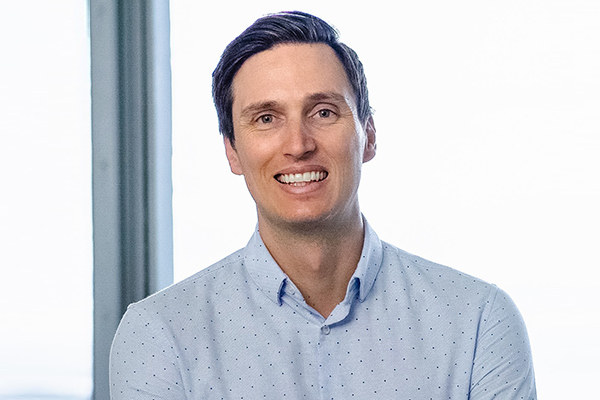
Hi, I’m Daemon McClunan
I’m proud to be the founder of both Atlantic Eye Centre, an eye specialist centre, and LIQID Medical Pty, a biotech company. My passion for research and innovation has led me to create four patented devices, and receive awards during my specialist training.
With a medical degree from Stellenbosch University, a specialist degree from the University of Cape Town, and experience working in Laser Eye Surgery centres in Canada, Germany, India and London, I’m dedicated to providing dedicated, patient-centred care.
Beyond the clinic, I’ve embarked on humanitarian missions, travelling over 15,000km by motorbike to provide rural eye screenings. In my downtime, I love mountain biking, diving, and spending quality time with my family.
My goal is for every patient to feel genuinely informed, comfortable, and well cared for – from their first conversation right through to their last post-operative visit.
Dr Daemon McClunan
MBChB(SU), DipOphth(SA), MMed(UCT), FcOphth(SA)