Why Can’t I Wear My Contact Lenses Before a Laser Eye Screening?
Why Can't I Wear My Contact Lenses Before a Laser Eye Screening?
If you've booked a laser eye screening and been told to stop wearing your contact lenses beforehand, you might be wondering why — especially if contacts are part of your daily routine.
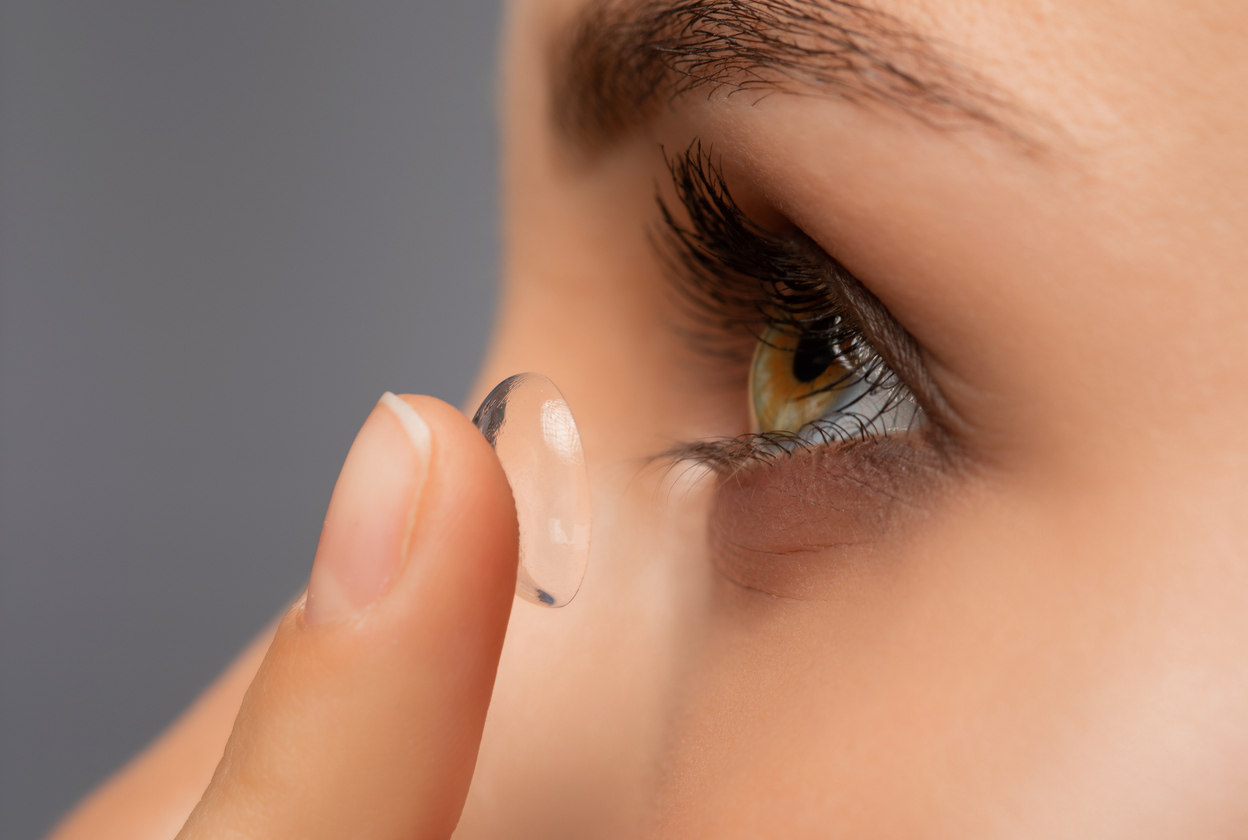
The reason is simple: contact lenses temporarily change the shape of your eyes, and for laser eye surgery, accuracy matters.
Here's why taking a short break from contact lenses is such an important part of your screening.
Contact Lenses change the shape of the Cornea
Your cornea, the clear front surface of the eye, plays a major role in how well you see. Laser eye surgery works by reshaping this surface with extreme precision.
Contact lenses sit directly on the cornea and, over time, can subtly alter:
- Corneal curvature
- Thickness measurements
- Surface regularity
Even though these changes are temporary, they can affect the accuracy of your screening results.
Why accuratemeasurements matter
During your laser eye screening, we perform detailed tests to determine:
- Whether you're a suitable candidate
- Which procedure (LASIK, PRK, SMILE or Presbyond) is safest
- How much correction can be achieved
- Whether your cornea is healthy and stable
If contact lenses are still influencing your cornea, these measurements may not reflect your eye's natural shape, which could lead to inaccurate recommendations and results.
How longshould I stop wearing contact lenses?
This depends on the type of lenses you wear:
- Soft contact lenses:
- Stop wearing them for at least 3–5 days before your screening
- Toric or extended-wear lenses:
- Usually require 1–2 weeks
- Hard or rigid gas permeable (RGP) lenses:
- May require 3–4 weeks, sometimes longer
Your optometrist will confirm the exact timeframe based on your lens type and prescription.
What happens if I don'tstop wearing them?
If you arrive for your screening without having stopped contact lens wear:
- Your corneal measurements may be unreliable
- Additional tests or repeat visits may be needed
- Your screening may need to be postponed
Taking a short break beforehand help avoid delays and ensures the most accurate assessment possible.
Can I wear glasses instead?
Yes, and we encourage it.
Wearing glasses allows your cornea to return to its natural shape, so your screening reflects your true eye measurements. While it may feel inconvenient for a few days, it plays a key role in long-term safety and outcomes.
Bottom Line
Contact lenses temporarily alter the cornea, which can interfere with the precise measurements needed for laser eye surgery. Stopping lens wear before your screening ensures your assessment is accurate, safe, and tailored to your eyes.
It's a small step that makes a big difference.
Ready to see if you're a Candidate?
You can start even before booking your screening.
Find out if you are suitable for laser eye surgery
Not everyone is eligible for vision correction surgery.
Find out if you could benefit from this life changing surgery by taking the quick self-suitability quiz below:
Our most popular procedures
What our patients say…
★ ★ ★ ★ ★
“The best care, the best treatment and the best doctors.”
 M.A.
M.A.★ ★ ★ ★ ★
“Everything was done with care and the doctor explained everything in detail. My surgery was a success and my sight has significantly improved – I no longer use glasses.”
 N.N.
N.N.★ ★ ★ ★ ★
“All I can say is WOW! I feel like I have new eyes.
Thank you just doesn’t even began to say how grateful I am. Your hole team is an absolute pleasure to be around. You guys rock”
 S.B.
S.B.★ ★ ★ ★ ★
“The service is excellent and the doctors are experts in their fields. I felt relaxed and confident that I was in great hands. Staff are warm, friendly and very helpful.”
 F.W.
F.W.★ ★ ★ ★ ★
“I would refer Dr Beatty to anyone interested in LASIK or PRK eye surgery. The entire experience was really pleasant with his and his staff’s professional advice and care before, during and after the surgery.
I am very thankful to be able to look at the world and go about my day to day activities without the hassle of glasses or contact lenses.”
 P.M.
P.M.★ ★ ★ ★ ★
“Best money spent ever. I am so happy with the results after I had LASIK done.”
 M.A.
M.A.★ ★ ★ ★ ★
“BEST decision and results after I had my LASIK done by Doctor Beatty!”
 A.A.
A.A.★ ★ ★ ★ ★
“I will definitely recommend Dr Beatty. I am so happy with my LASIK.”
 R.B.
R.B.★ ★ ★ ★ ★
“Dr Daemon McClunan and the entire staff at Atlantic Eye Centre, Foreshore are beyond AMAZING. The medical care I received from Dr McClunan was outstanding and the staff was always friendly and professional.”
 M.M.
M.M.We have replaced the images of real patients who provided these testimonials to protect their privacy.

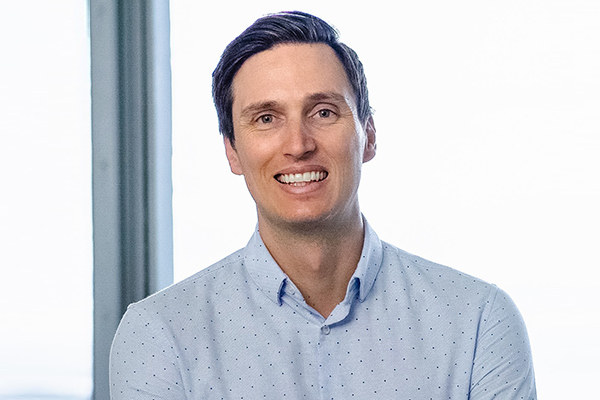
Hi, I’m Daemon McClunan
I’m proud to be the founder of both Atlantic Eye Centre, an eye specialist centre, and LIQID Medical Pty, a biotech company. My passion for research and innovation has led me to create four patented devices, and receive awards during my specialist training.
With a medical degree from Stellenbosch University, a specialist degree from the University of Cape Town, and experience working in Laser Eye Surgery centres in Canada, Germany, India and London, I’m dedicated to providing dedicated, patient-centred care.
Beyond the clinic, I’ve embarked on humanitarian missions, travelling over 15,000km by motorbike to provide rural eye screenings. In my downtime, I love mountain biking, diving, and spending quality time with my family.
My goal is for every patient to feel genuinely informed, comfortable, and well cared for – from their first conversation right through to their last post-operative visit.
Dr Daemon McClunan
MBChB(SU), DipOphth(SA), MMed(UCT), FcOphth(SA)